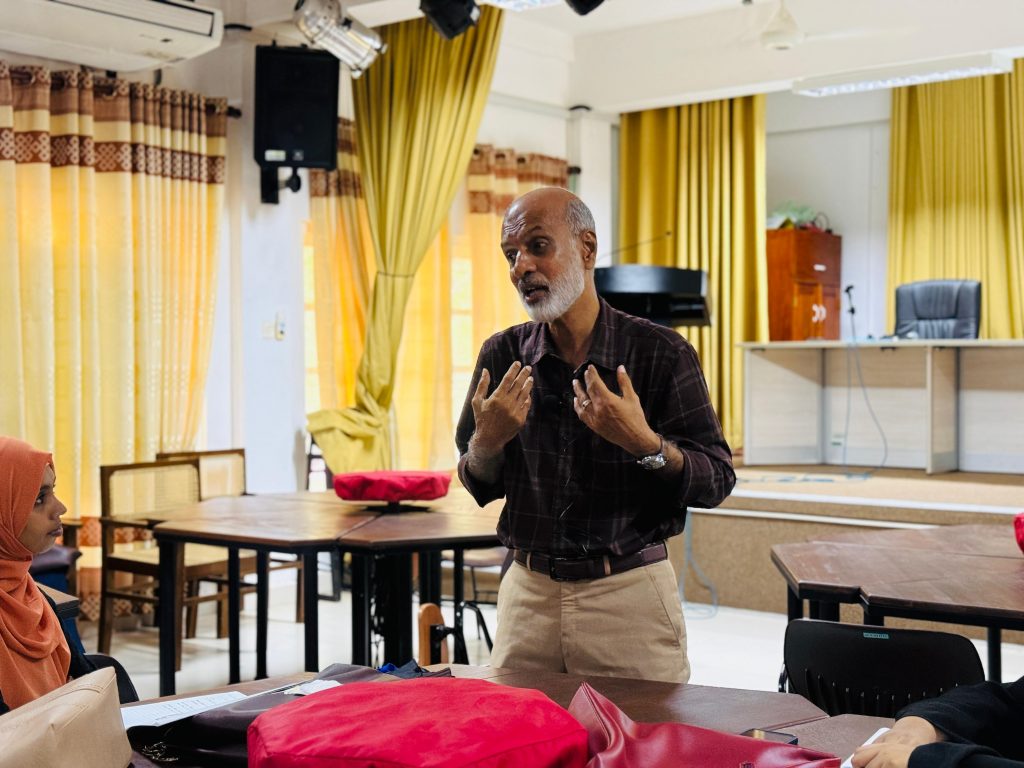
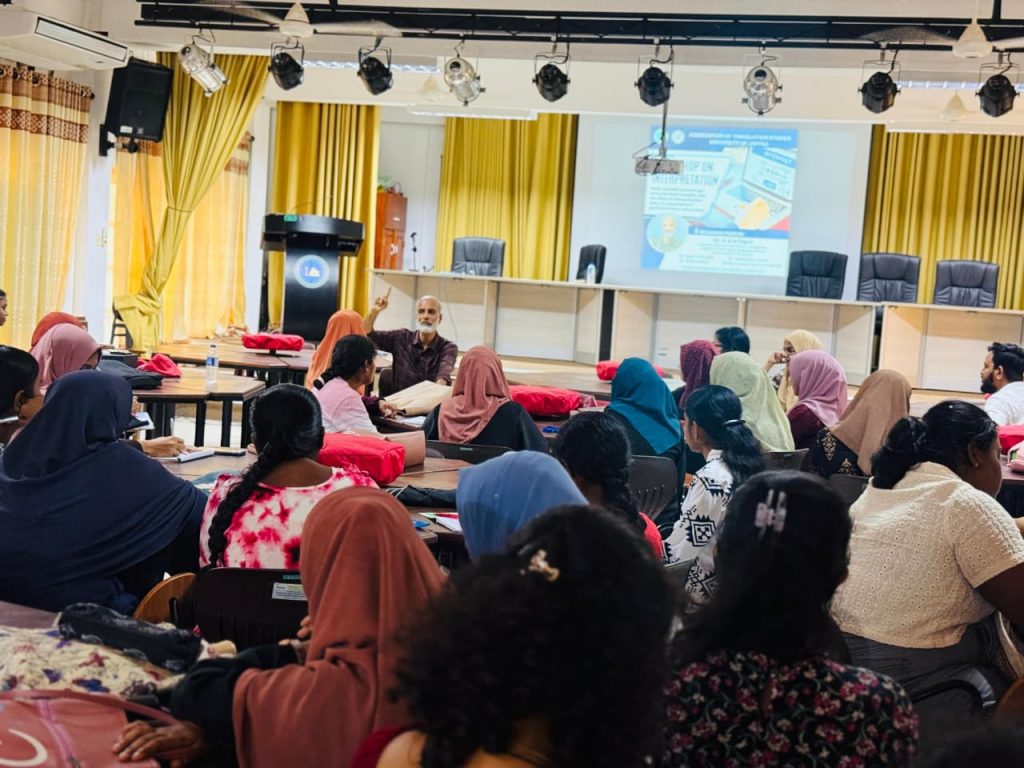
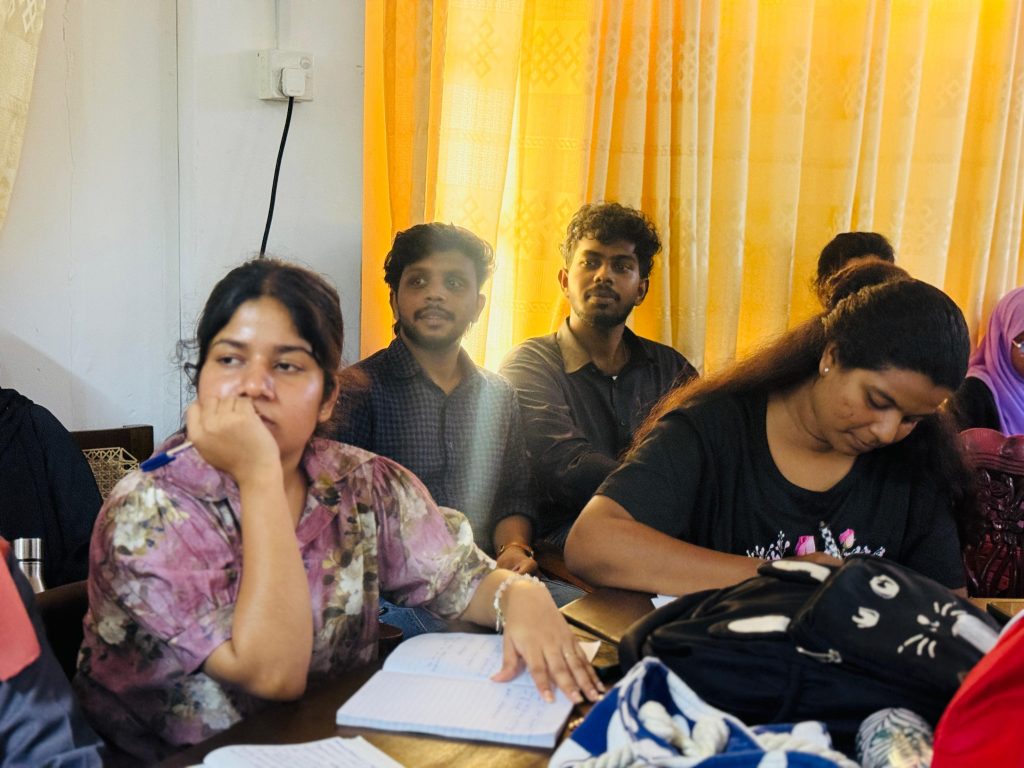
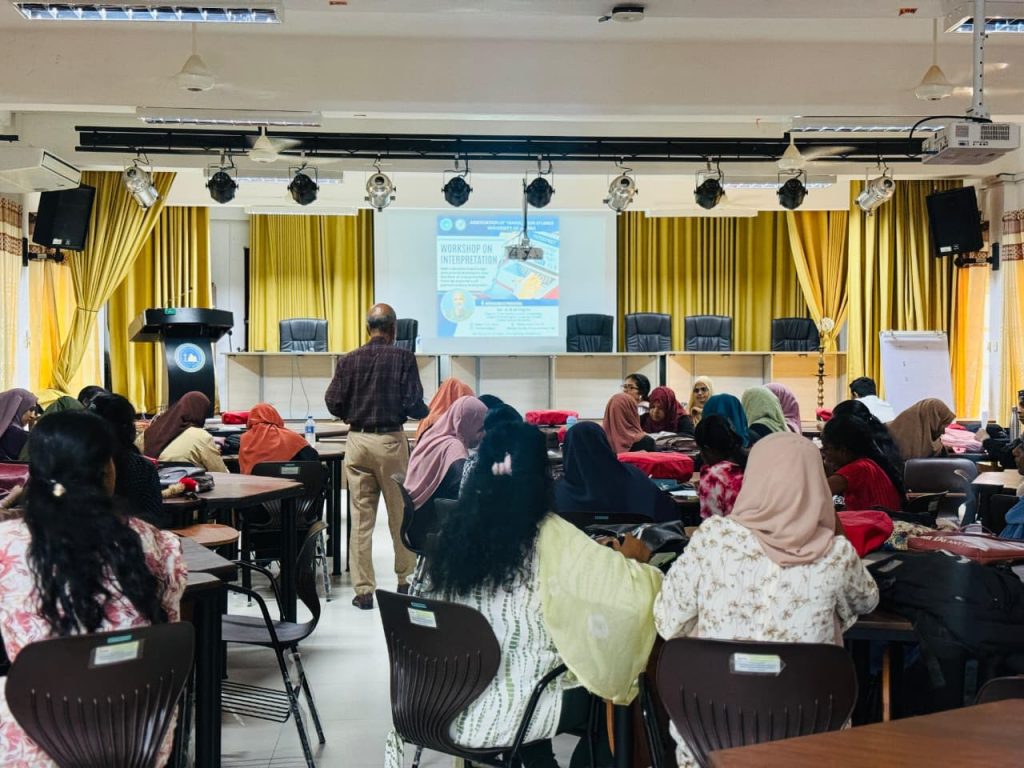
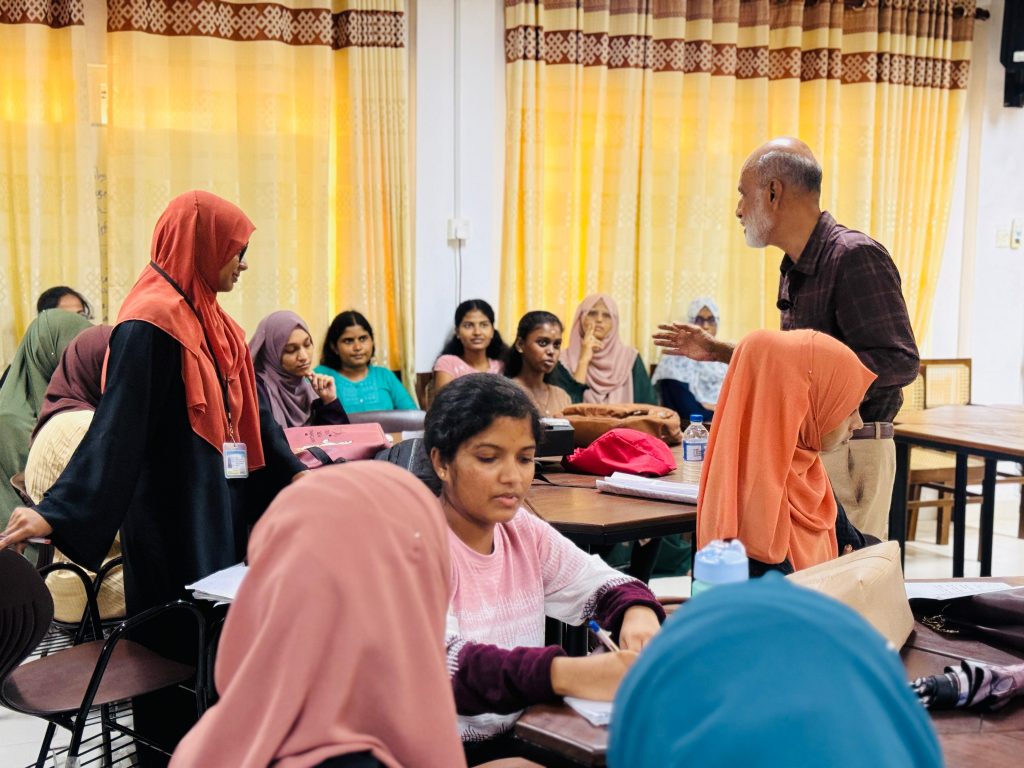
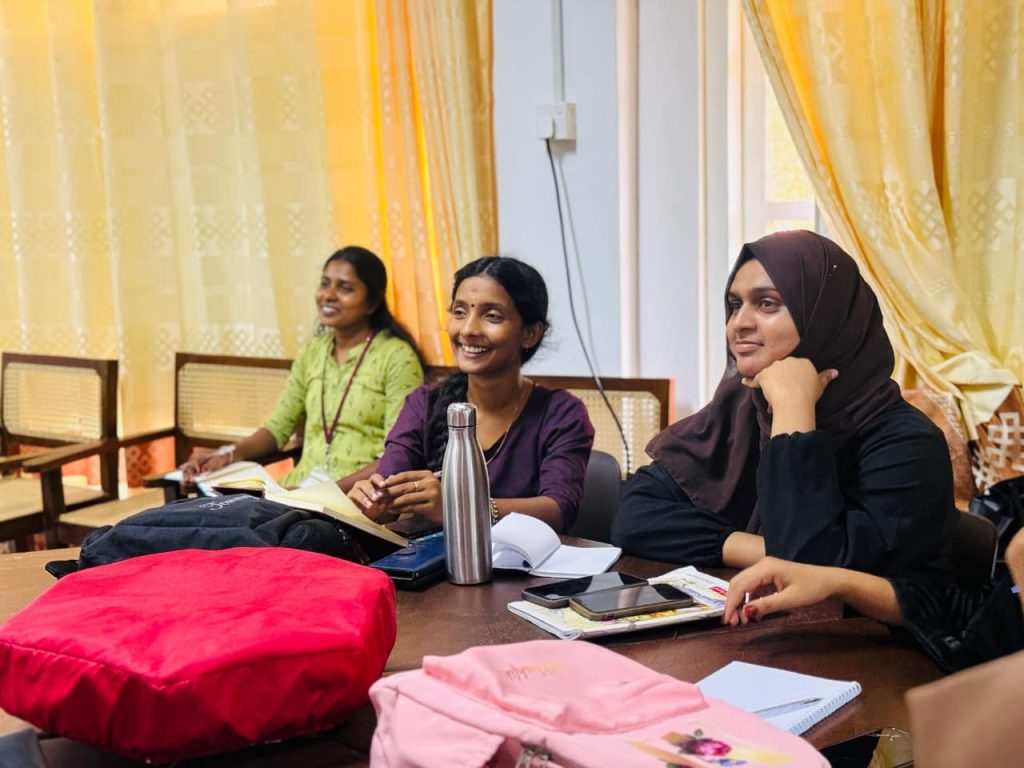
The Department of Translation Studies, University of Jaffna organized a training session on interpretation on 13.05.2026 from 1.00 p.m. to 4.00 p.m. at the Faculty of Arts Seminar Hall. The resource person for the session was Mr. A. G. M. Fiqrhi, Deputy Chief Parliamentary Interpreter (English/Tamil/English Language Stream), Parliament of Sri Lanka. The session aimed to introduce students to professional interpretation practices, with particular emphasis on simultaneous interpretation in parliamentary and conference settings.
Mr. Fiqrhi explained that simultaneous interpretation involves rendering speech into another language in real time while the speaker continues speaking. He highlighted that it requires strong listening skills, rapid cognitive processing, and the ability to deliver accurate meaning instantly without word-for-word translation. He further noted that clarity, fluency, and meaning-based interpretation are essential in such high-pressure communication environments.
The resource person also described the practical working conditions of simultaneous interpretation, including the use of equipment such as headsets and microphones, where interpreters receive audio input, process it instantly, and deliver output almost simultaneously. He added that interpreters typically work in shifts due to the high mental concentration required.
He shared practical tips for developing interpretation skills, emphasizing active listening, memory enhancement, shadowing practice, vocabulary building, and consistent exposure to both source and target languages. He also encouraged students to improve note-taking skills, stay updated with current affairs, and develop subject knowledge across disciplines to enhance comprehension.
Further, he advised students to strengthen overall language proficiency through regular reading of newspapers, academic texts, and speeches, as well as listening to parliamentary debates and international conferences. He stressed the importance of fluency, pronunciation, and articulation in achieving professional-level interpretation competence.
The session was highly informative and beneficial, providing valuable insights into the skills and demands of simultaneous interpretation. It helped participants understand both the theoretical and practical aspects of the field and encouraged them to further develop their language and interpretation abilities.